
McLennan City Directory Shelf
Historical directory work in McLennan County begins with Waco, because the strongest identified runs are Waco volumes. They do not form one continuous series. A useful search compares the collection catalog, the printed year on the volume, and the publisher cited for that volume. The table separates the major access channels so a missing year in one catalog does not end the search.
| Collection | Years | Where Held | Access |
|---|---|---|---|
| Waco City Directories | 1876–1923 | Baylor Texas Collection | In-library viewer; household, address, occupation, and advertising material. |
| Waco city directories | 1878–79 through 1991–94, uneven runs | Texas State Library and Archives Commission | Reading-room holdings; confirm the precise year in the catalog. |
| Morrison & Fourmey Waco directories | Selected years, 1886–1953 | UT Briscoe Center citation record | Use the citation to confirm a run and plan repository research. |
| Genealogy Center newspapers and family material | Runs vary | Waco-McLennan County Library Genealogy Center | Onsite print, microfilm readers, and restricted databases. |
Baylor describes alphabetical resident listings, generally under the household, with addresses and occupations. TSLAC adds later years but lists them in uneven clusters. Morrison & Fourmey entries provide an independent catalog cross-check for selected Waco volumes. A gap may reflect the collection, publication, cataloging, or a scan limitation, rather than proof that a household was absent.
Note: Write down the directory year and page before comparing a surname across repositories.
McLennan City Directory at Baylor
Baylor’s Texas Collection makes the 1876–1923 Waco run a primary starting point for a McLennan County city directory search. The collection is available for in-library use at the Texas Collection in Carroll Library. The entry can include more than a name and address: family references, older children, boarders, ethnicity, and advertisements may appear in older volumes. Copy the printed wording instead of converting it into a modern conclusion.
The Waco-McLennan County Library Genealogy Center supplies another local access channel, with 38,000-plus print items and microfilm, local newspapers, census material, family histories, and onsite databases. Its West Waco Library location is 5301 Bosque Boulevard; the listed phone is 254-750-5945. Hours listed by the library are Monday 10–8, Wednesday through Saturday 10–6, with Tuesday and Sunday closed.
The Genealogy Center source page shows the local research service used alongside the historical volumes.
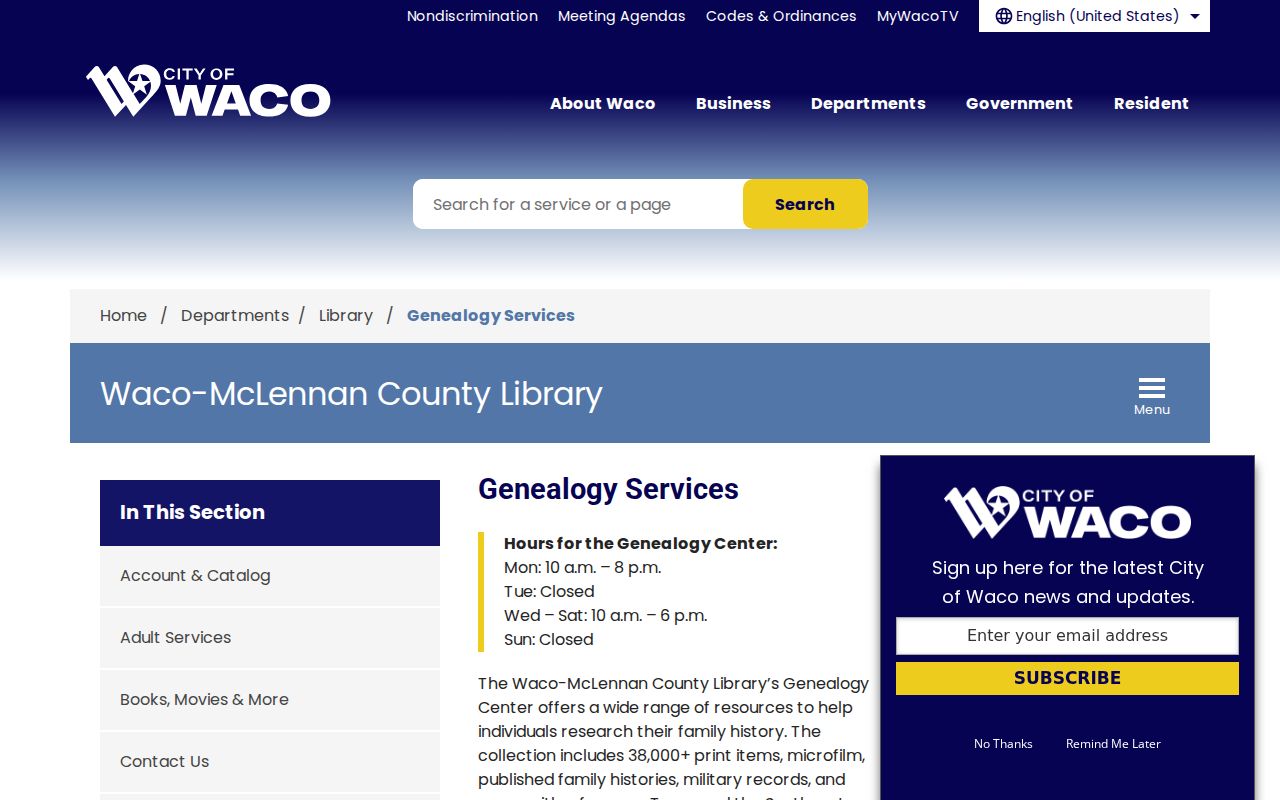
Its microfilm readers and onsite resources make it a practical place to check a directory clue against newspapers or census material.
McLennan City Directories at TSLAC
TSLAC is the essential comparison shelf when Baylor does not hold the desired Waco year. Its list starts with 1878–79 and reaches 1991–94, but the years are not a straight annual run. The catalog includes pairs and clusters such as 1890–91, 1900–01, 1953–56, 1961–69, and 1971–79. Treat each listed range as catalog coverage, then verify the individual volume before drawing a household timeline.
Comparison. Baylor covers 1876–1923, while TSLAC overlaps that period and extends later in uneven runs. Compare both catalogs before deciding that a Waco directory year is missing.
A City of Waco historical collection can also help set an old Waco label in local context.
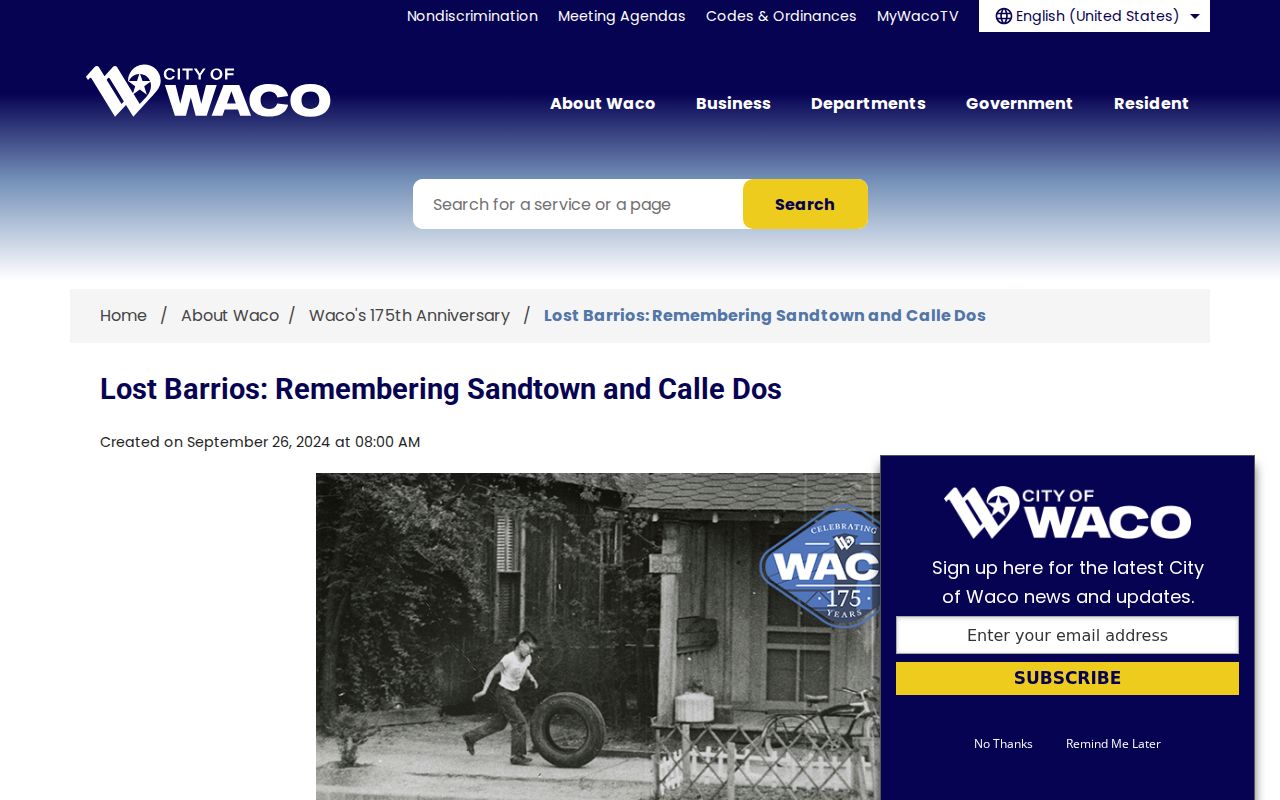
Historical context can explain an old place label, but the directory page and year remain the evidence for a household entry.
Reading McLennan City Directory Entries
Read a Waco entry as a dated transcription task. The collection research supports a field-by-field capture, not a guessed profile. Preserve initials, punctuation, the exact street form, and the page reference. Household notation can carry a spouse or widow reference; boarders, children, business listings, and advertisements may appear elsewhere in the volume. An owner or renter mark belongs in the notes only when that particular volume actually prints one.
| Surname and given name | Record the alphabetical heading, initials, and spelling exactly as printed. |
|---|---|
| Household notation | Keep spouse, widow, child, or boarder notation when the entry shows it. |
| Street address | Capture number, street, room or apartment, and any cross-reference. |
| Occupation wording | Transcribe the historical description; it is not a current-status statement. |
| Page and key | Keep the year, publisher, page, and the volume’s abbreviation key together. |
- Criss-cross directory
- An address or street-order section that can lead from a location to an entry when a volume includes one. No complete public McLennan inventory of separate reverse volumes was located.
- Householder index
- An alphabetical arrangement that centers the household name instead of every person who might appear at the address.
- Abbreviation key
- The front-matter guide that decodes initials and symbols. Check it before expanding a shorthand mark.
McLennan City Directory Research Rooms
Directories are only one shelf in a local trail. The McLennan County Archives has two research rooms in the old Southwestern Bell building at 824 Washington Avenue, Waco. It holds county clerk indexes, district clerk material through 2007, assessor abstract books, tax rolls, maps, and drawings. Listed hours are Monday through Friday, 8:30–4:30; entry uses a locked ring doorbell, and the listed phone is 254-757-0860.
Ask for a record series, volume or year, index type, and whether an item is an original, microfilm, abstract, or map. That question is more useful than asking whether the archive has a name. The Genealogy Center offers staff and volunteer guidance, microfilm readers, and FamilySearch Affiliate access. Baylor adds family, institutional, and civic collections that can fill a context gap around a directory entry.
Its onsite databases include American Ancestors, Ancestry Library Edition, HistoryGeo, Newspapers.com Library Edition, and African American Heritage. A free FamilySearch account can unlock restricted digital records at the Center. Record whether a finding came from a public webpage, a library database, microfilm, or an archive item so another researcher can repeat the route.
The Waco library research guides show the kind of focused genealogy routes available locally.
A librarian or archivist can help turn a surname and year into a collection, reel, volume, or page citation.
Waco City Directory Timeline
The local record trail provides a compact timeline for placing a McLennan County city directory in its wider setting. County formation, early deed records, directory runs, tax materials, and electronic indexing all mark changes in where a researcher must look. The timeline does not make a directory continuous. It shows why a printed volume, a map, and an archival book may belong in the same search.
- 1850: McLennan County is created, and the first Commissioners Court minutes begin in September.
- 1870s: Waco directory holdings begin in the Baylor and TSLAC collections.
- 1878–1989: the County Archives lists assessor and tax-roll material, including historical maps.
- 1930–1942 and 1946: TSLAC lists Waco and rural scholastic census material.
- 1996 forward: the County Clerk reports electronic Official Public Records coverage, while older materials remain part of the manual trail.
Tracing McLennan City Directory Households
A city directory becomes more useful when it is treated as a sequence. Begin with the earliest confirmed entry, then follow the surname and address through the next available Waco volumes. Each move, spelling shift, widow notation, or business reference is a dated observation. Pair a directory year with census material at the Genealogy Center, then test a property clue with a deed, tax record, newspaper, obituary, or cemetery lead.
- Record the first confirmed name, address, year, page, and publisher.
- Check the next available directory year, noting changed spelling, street number, or household notation.
- Inspect a street or reverse section only when the volume contains one, then return to the alphabetical entry for detail.
- Pair the directory year with census material and local newspapers to test whether the same household remains in place.
- Use obituary, probate, vital, or cemetery research to investigate a disappearance without assuming its cause.
Baylor cautions that fragile margins and tightly bound pages may not be fully captured. A missing online image needs an onsite check. For a modern address-keyed record trail, use the separate McLennan County by-street directory rather than stretching an old directory entry into a current conclusion.
Waco City Directories and Sanborn Sheets
Sanborn maps give a directory address physical context without naming its occupants. Waco has an April 1885 nine-sheet set at the Library of Congress, plus identified 1893 and 1916 sheets at the University of North Texas. They can show buildings, streets, lots, businesses, and land use. Use the directory for the household lead and the map for the built setting, then keep those functions separate.
The City of Waco department directory is a current staff-routing source when a city custodian must be identified for a planning, cemetery, permit, or public-information question.
A staff listing identifies the right city office, not a historical resident list or proof of a person’s connection to an address.
McLennan City Directory Gaps
A missing name in a McLennan County city directory does not settle whether a person lived in Waco. The volume may omit a household, use another spelling, show only a business entry, or have an incomplete scan. Waco also sits within a county of incorporated places and unincorporated communities, so a historic Waco label may not line up with a present municipal boundary. Follow the street address, not only the city name.
Myth check. A directory entry is a dated historical lead, not proof of current presence, a complete household, or a full countywide roster.
McLennan County identifies 22 incorporated cities and two unincorporated communities. Waco planning material also records annexation, extraterritorial jurisdiction, subdivisions, and zoning, which can explain why the municipal name in a volume differs from a later address label. The county road-map guide is useful when a Waco ZIP overlaps Woodway or when a county community appears beside the Waco run. Preserve the label used by the source and add the street address before deciding that two records describe the same place.
The Waco Municipal Court source is a separate city record route with limited municipal scope, not an alternative to directory research.
Keep a municipal record lead and a historical directory citation separate, then compare their dates and jurisdiction before relying on either.